


Solar Market Signals: Quality Thresholds, Storage-Ready Policy and Bankable Demand
Solar Hot Topics Report
Quality Thresholds, Storage-Ready Policy and Bankable Demand
21 October 2026 · Beijing Time · Monitoring window: 19–21 October 2026
One-line takeaway: Solar demand is becoming more selective rather than weaker: higher module-quality thresholds, storage-friendly rules in Poland and Romania, and large financed projects all favor suppliers that can combine verified specifications, export control, commissioning and long-term service.
Priority market signals
1. China proposes technology-specific efficiency thresholds for TOPCon, HJT and BC
Priority: High · Confidence: High · Event date: 16 October 2026 · Publication date: 20 October 2026
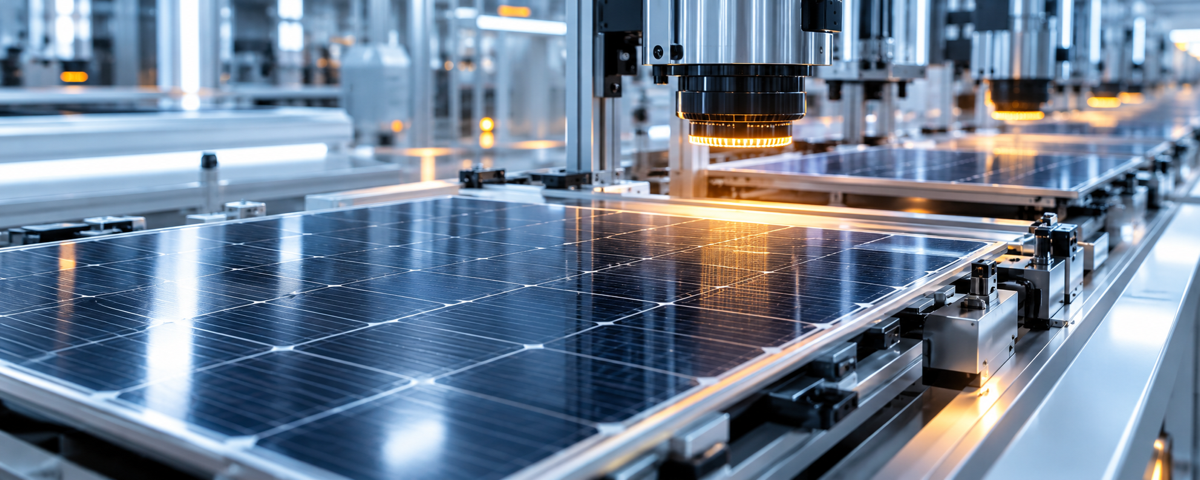
China's draft 2026 Photovoltaic Manufacturing Industry Specifications would replace a single n-type benchmark with separate technology thresholds. New or expanded module lines would need average efficiencies of 24.2% for TOPCon, 24.0% for HJT and 24.4% for BC; existing lines would face 23.4% for TOPCon and HJT and 23.7% for BC. The draft also raises cell thresholds, sets expectations for tandem and perovskite products, tightens polysilicon energy and water requirements, and increases minimum annual R&D expenditure.
Commercial reading: This is not an immediate product ban, but it points toward faster separation between bankable high-efficiency supply and lower-grade inventory. European buyers should request production-line identity, batch-level efficiency evidence, degradation data and traceability instead of relying on a nominal power class alone.
Source: Draft-efficiency analysis and consultation details
2. Poland unlocks larger home batteries and opens a PLN 1 billion storage subsidy
Priority: High · Confidence: High · Event date: 20 October 2026 · Publication date: 20 October 2026
From 1 December, Polish prosumers will be able to connect battery power up to 2.2 times the rated power of their PV system without the battery counting toward the installation's registered power, provided combined export remains below the PV rating. The rule concerns kilowatts, not kilowatt-hours. A separate PLN 1 billion support program opened on 20 October and covers up to 30% of eligible battery costs, capped at PLN 800/kWh for batteries of at least 10 kWh.
Commercial reading: Poland becomes a strong near-term target for 10–20 kWh residential storage, export-limited hybrid inverters, smart meters and compliant control logic. Suppliers should prepare 5–10 kW PV plus 10–20 kWh storage packages with documented zero-export behavior.
Source: Poland's amended connection rules and storage-support context
3. Romania's next solar phase is defined by grid access, hybridization and storage
Priority: High · Confidence: Medium-High · Event date: 19–20 October 2026 · Publication date: 20 October 2026
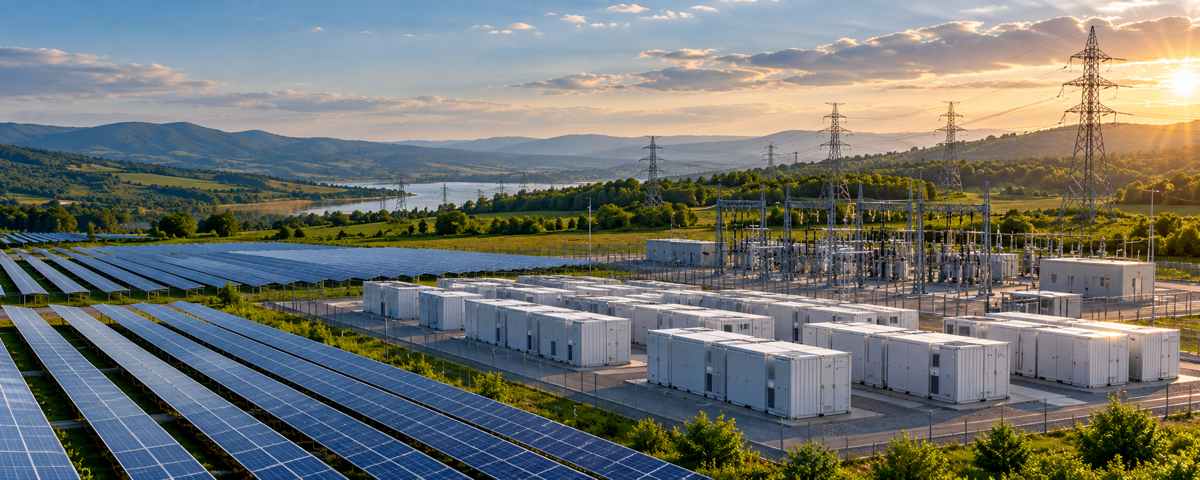
Romania installed about 2.2 GW of solar in 2025 and exceeded 8.5 GW of cumulative capacity by mid-2026. Industry discussion focused on auction-based grid connections, negative prices, hybrid assets and revenue stacking. Utility-scale battery capacity has surpassed 1 GW, while distributed storage is expanding through prosumers.
Commercial reading: Romania is moving from pure module demand toward system demand. Developers need bankable hybrid design, controllable export, multi-revenue EMS logic and a clear commissioning plan.
Source: Intersolar Summit Romania market review
4. Italy awards €770.4 million for 505 MW of agricultural rooftop solar
Priority: High · Confidence: High · Event date: 20 October 2026 · Publication date: 20 October 2026
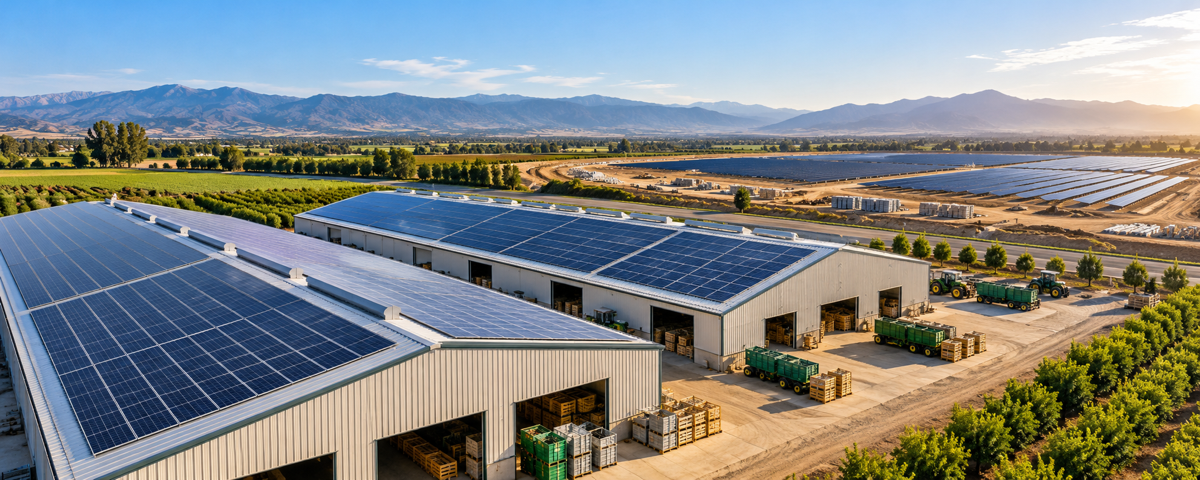
Italy awarded €770.4 million to 7,409 agricultural, livestock and agro-industrial rooftop projects totaling approximately 505 MW. Demand exceeded the budget: 1,863 eligible applications representing about 170 MW were not funded, while 7,610 applications failed eligibility checks.
Commercial reading: The funded pipeline creates a large but compliance-sensitive opportunity for installers, rooftop modules, inverters, mounting and monitoring. The high rejection count shows that documentation and eligibility support can be as important as price.
Source: Italian Agrisolare award results
5. Four-hour firm solar-plus-storage secures a 300 MW / 1,200 MWh PPA
Priority: Medium-High · Confidence: High · Event date: 19 October 2026 · Publication date: 19 October 2026
ACME Solar signed a 300 MW / 1,200 MWh firm, dispatchable renewable-energy agreement at INR 6/kWh. The project must supply four hours of assured peak power during non-solar hours and maintain at least 90% monthly availability.
Commercial reading: Storage duration, availability guarantees and dispatch windows are becoming the bankable product. Offers should state usable energy at end of warranty, efficiency assumptions, augmentation strategy, response time and liquidated-damages boundaries.
Source: Firm-dispatchable PPA details
6. European development-finance capital backs a 500 MW Philippine solar project
Priority: Medium · Confidence: High · Event date: 20 October 2026 · Publication date: 20 October 2026
Norway's Climate Investment Fund and Impact Fund Denmark acquired a 49% stake in the 500 MW Ixus Bugallon project, which had already reached financial close with approximately $310 million of senior debt.
Commercial reading: Equipment vendors should prepare lender-ready technical files, environmental and social documentation, factory audit support, traceable supply chains and long-term warranty security.
Source: 500 MW Ixus Bugallon investment announcement
7. A 20-year financing package advances 50 MW of solar in Ivory Coast
Priority: Medium · Confidence: High · Event date: 20 October 2026 · Publication date: 20 October 2026
A Dutch development bank is providing €55.5 million of long-term financing for the 50 MW Kong solar project, backed by a 25-year power purchase agreement. Construction is under way and commissioning is planned for 2028.
Commercial reading: The sales signal is for bankable modules, robust inverters, spare-parts planning and tropical-climate O&M support. Quotes should separate hardware, logistics, commissioning, training and replacement stock.
Source: Kong solar financing details
European sales opportunities
| Country / account | Entry point | Why now | Follow-up |
|---|---|---|---|
| Poland installers and wholesalers | 10–20 kWh LFP, 5–10 kW hybrids, export meters | New 2.2x rule and storage subsidy | Issue subsidy-ready packages with BMS and zero-export documentation |
| Romania EPCs and developers | Hybrid blocks, four-hour storage, EMS | Grid auctions and negative prices | Offer a grid-injection and revenue-stacking workshop |
| Italy agricultural EPCs | Rooftop modules, three-phase inverters, mounting | 7,409 funded projects | Build regional stock, staged delivery and document packs |
| European C&I owners | 30–50 kW hybrid plus 100–250 kWh storage | Four-hour procurement is normalizing | Quote usable energy, availability, augmentation and service separately |
Risks and warnings
- Quality policy: Proposed Chinese thresholds may accelerate inventory segmentation; verify batch efficiency and factory-line status.
- Storage design: Battery power, capacity, export limits and backup output are different quantities.
- Grid access: Romanian projects without a clear connection position remain speculative.
- Execution: Italy's high ineligibility rate shows that documentation failure can eliminate otherwise attractive projects.
- Supply chain: Development-finance projects may require enhanced environmental, labor and traceability evidence.
- Cybersecurity: Connected batteries and EMS platforms need defined updates, access control and incident response.
Brand and competitor dynamics
No reliable public mention of Solligent was identified in the measured open-web set during this window. No crisis, bug, praise, question or spam item requires routing.
- Lead: Poland home storage, Romania hybrid projects and Italy agricultural rooftops should be routed to sales development within one business day.
- Question: China's draft efficiency thresholds should be routed to the product team within one business day.
Seven-day trend
- Storage intensity remains elevated: large German four-hour projects in the previous report are now reinforced by Poland, Romania and a firm four-hour PPA.
- Quality and compliance are converging: technology-transfer controls are now joined by manufacturing-efficiency thresholds.
- Distributed European demand strengthened: Italy and Poland create immediate, installable demand.
- No verified brand crisis spike: closed-network baseline data remains unavailable.
Coverage disclosure
| Surface | Label | Limitation |
|---|---|---|
| Government, regulator and company announcements | Measured | Events, not sentiment or sales volume |
| Open industry media and public search | Measured for indexed pages | Not a complete market census |
| X, Instagram, TikTok, LinkedIn | Proxy only | No user export; no native metrics measured |
| WeChat, WeChat Channels, Xiaohongshu, Douyin | Proxy only | No user export; no native metrics measured |
Three immediate sales actions
- Launch a Poland-ready storage sheet with 5, 10 and 20 kWh options, export control, approved BMS, warranty and subsidy-ready scope.
- Create two bankability packs for high-efficiency modules and four-hour C&I storage.
- Build an Italy–Romania target list focused on funded agricultural EPCs and developers with confirmed grid-connection status.